These are difficult times for the immigrant communities in Yonkers. While unprecedented federal enforcement actions in Chicago and Los Angeles have dominated the headlines, local immigrants remain on edge, as news of local Immigration and Customs Enforcement (ICE) activities – either real or rumored – circulate on social media.
Last week tensions ratcheted up as ICE agents were spotted in Yonkers searching for and detaining undocumented residents. The rumor mill kicked into high gear, prompting Mayor Mike Spano to issue a statement confirming that ICE and other federal agencies were here. The posting assured people that the operations were over.

Spano made a point of noting that the “Yonkers Police Department was not part of this joint task force.” Significantly, this seems to distance the Yonkers authorities from any full scale cooperation with ICE, a matter that would be of increasing concern if federal operations here were to intensify.
Of the four individuals who were detained, all had re-entered the US after being deported, and two had also been previously convicted of drunk driving, according to a DHS statement.
As is clear to anyone who travels through the city, Yonkers is very much a city of immigrants. About 70,000 residents are foreign born – about one in three. There’s no precise count of how many are undocumented, but it’s estimated to be about 14,0000 people. The Dominican Republic and Mexico are the dominant countries of origin.
Fear of ICE
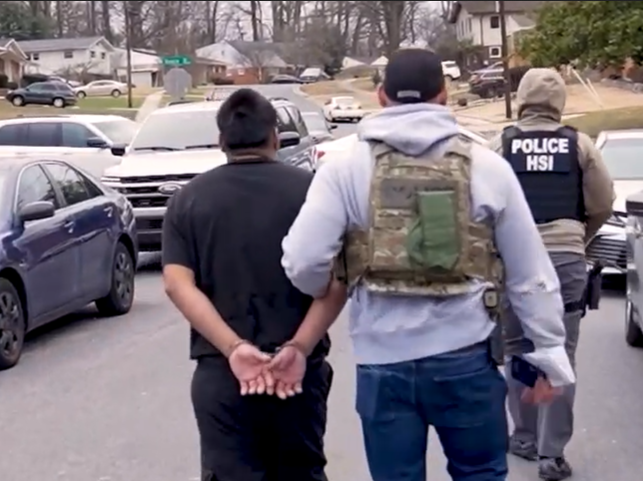
Raids by officers in masks and combat gear inspire the most fear, but so far most of the stepped up enforcement has taken place at the Federal building in downtown Manhattan, site of the immigration courts and a controversial ICE holding facility. This bland government high rise is for now the chosen focal point for the pursuit of President Donald J. Trump’s promise to conduct mass deportations.
“We don’t have large numbers of ICE officers in the street, we don’t have those optics yet,” says Karin Anderson Ponzer, director of legal services at Neighbors Link, a Hudson Valley nonprofit. “People should not think that this community is somehow safe from this injustice. There is an invisible deportation machine that is disappearing people away from their children and out of their communities. The whole infrastructure has been changed to facilitate people getting sucked out.”
Immigration Courts Given Directives to Increase Faster Deportations
Fundamental changes in the immigration courts have been geared to increasing deportations, Ponzer says. The administration has issued new directives to immigration judges, calling for faster and harsher disposition of cases. Some judges have been fired, to be replaced by new judges selected to carry out the administration’s directives.
Ponzer relates stories to back up her description of the new approach. A pregnant woman experiencing morning sickness arrives 30 minutes late and is ordered deported for missing her hearing. Another woman was detained while her children were at school, leaving the two children alone, with the only next to kin, the woman’s brother in North Carolina.
“So many people in this situation, people who are victims of crime, people who have excellent claims for asylum, they have all these challenges, and now under the new rules, they’re in a system that’s designed to fail, and that is not the purpose of immigration law.” Ponzer’s 25-person legal staff at Neighbors Link has been stretched to the limit – with harried lawyers having less time to jump in and save clients caught in dire situations.
Catholic Charities Community Services Help Clients
Yet the impact of the crackdown is being felt not only in downtown Manhattan, but also on the streets of Yonkers. At the Yonkers Avenue day laborer program run by Catholic Charities Community Services, workers choose not to show up on days when there are rumors of ICE activity. “It’s very scary because it seems to be moving east,” says Lucia Goyen, program director. “Who knows what will happen with the [NYC] mayoral elections,” echoing the sentiment that the election of Zohran Mamdani will goad Trump to lash out at New York.
Goyen says that CCCS has put a new emphasis on helping clients make contingency plans, such as making advance arrangements for child care and never going out without passports and other documents. “People get moved very quickly. After they get detained, within the next two hours they’re up in Newburgh. After 24 hours, they’re moved again. By the time they’re in the system, they’re in a totally different state.”
Life in Yonkers
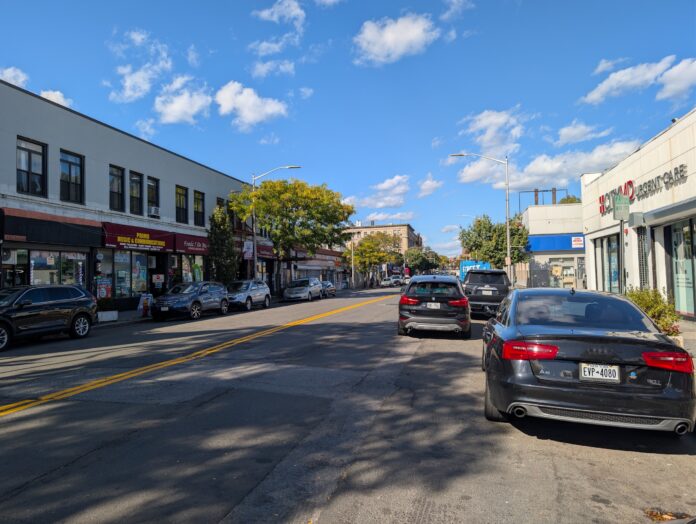
On the streets and in the shops of Southwest Yonkers, home to the city’s most densely concentrated immigrant population, people live their lives more cautiously – not leaving the house when rumors swirl, but otherwise going about the business of earning a living and taking care of family.
At a spot on Nepperhan Avenue, a tight knit group of women gather to discuss the current immigration climate. They represent a cross section of the Mexican community – the eldest, a citizen who has lived in Yonkers for 20 years; her daughter an American-born high tech worker; the elder woman’s sister, here without papers; and a restaurant owner.
“People are scared,” says the citizen. “If there’s a report or a rumor, people will just stay home and not go out all day. It’s a violation of our constitutional rights. When will LA or Chicago happen here? We’re just waiting for that day.”
The restaurant owner worries about the business impact of further enforcement. “Half of the people who work for me don’t have papers,” she says. “If it gets to be like Chicago, we’re going to close.”
High School Students Continue their Studies
At an after school study program, two high school students, one a senior, the other a sophomore, reflect a determination to work hard and pursue meaningful careers. The senior is from the Dominican Republic, already with permanent residence, and the younger from Venezuela, whose future depends on the success of his father’s request for political asylum.
“We’re not afraid, because we believe it’s not something that’s going to happen in Yonkers, and if it happens, I think we’re OK,” says the senior. He observes that rumors of ICE raids don’t pop up on his phone, because it’s “not on my algorithm.” He lights up when he talks about his specific career plan to study agricultural engineering – his goal is to build more efficient systems for farming.
The sophomore has traveled a tougher road. He and his brother left Venezuela to live first in California, then Texas, and finally Yonkers. He studies hard, and his father worries about their case for political asylum. “He just wants me to study hard,” he says. “We just want to finish school and have a bright future.”
His plan is to go on to college to study cybersecurity.