A Tree Grows in Yonkers — S2E5…
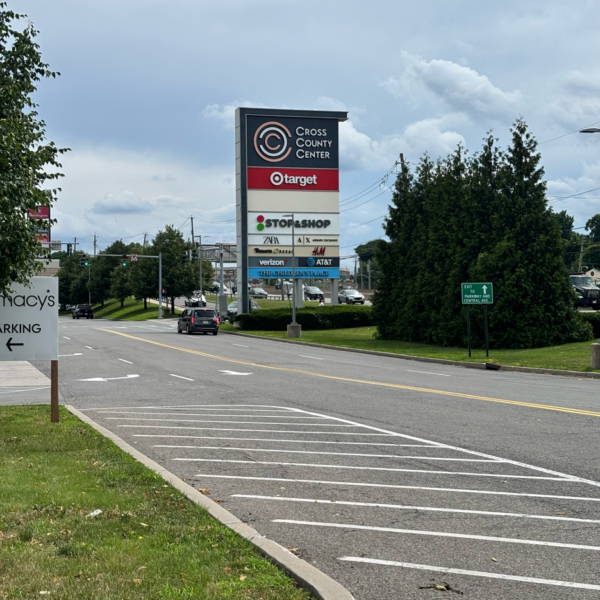
On Sunday afternoon, July 5, the Cross County Center teemed with life. Maybe it was the Fourth of July sales or people just trying to escape the heat. Regardless, things were hopping, and I got caught up in the energy.
But I wasn’t shopping — I had a different objective. Not even the crowded fragrance counters at Macy’s — perfuming the air with competing “sexy” aromas — could distract me.
I was there for the trees.
In my quest to find 100 interesting Yonkers trees, I wondered if there were any hiding in plain sight at the mall. The mall opened in 1954 as one of the country’s first outdoor shopping centers, and I fantasized that some of the original trees might still be standing.
I wasn’t prepared for what I found.
Cookie cutter cultivars in the parking lots
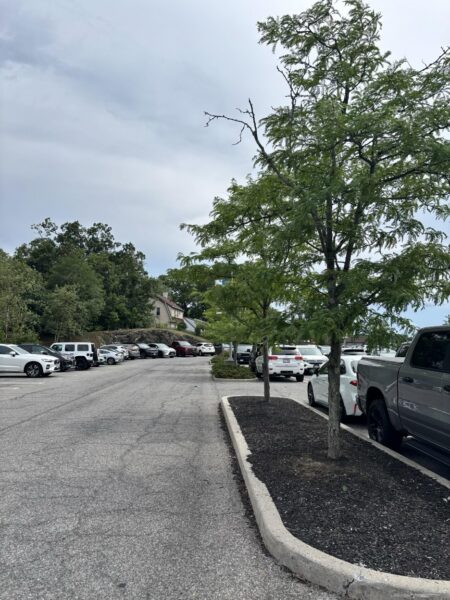
My search began in early spring, in the parking lots of the Bank of America and Stop & Shop. Mostly I found manipulated versions of the real thing — the cookie-cutter cultivars specifically bred to mall-owner perfection. They are the choice of landscape architects whose mission impossible is to beautify parking lots with no-fuss, no-muss trees that don’t drop a lot of seeds and fruit, grow too big or require a lot of care.
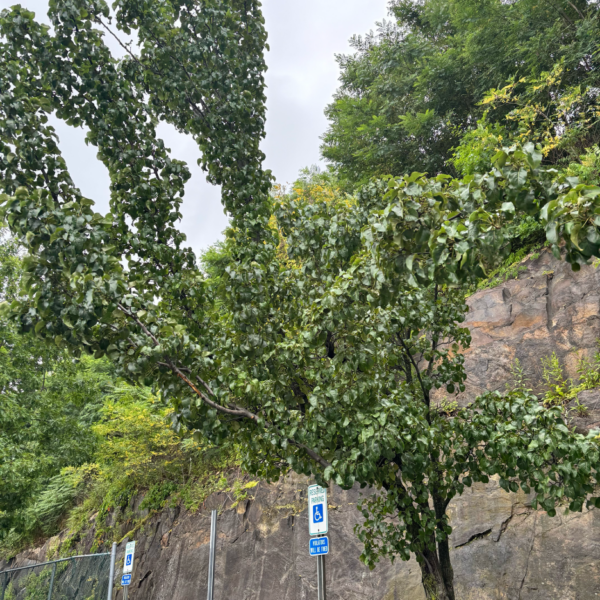
At the bank, spindly honey locust cultivars line the parking lot islands. Along the Stop & Shop cliffs, buffering the homes along Kimball Avenue, I saw a few sad Callery pears, with their weary branches sandwiched between the wall of blasted stone and a chain-link fence.
No great trees here.
The search continues in front of Macy’s
With summer in full swing, I decided to try again at the opposite end of the mall along the Central Avenue entrance by Macy’s, the patron saint of New York’s fireworks celebrations. Even though I have driven by a million times, the demanding traffic and ridiculous merges keep my eyes on the road, and not on the foliage. Perhaps I overlooked something.

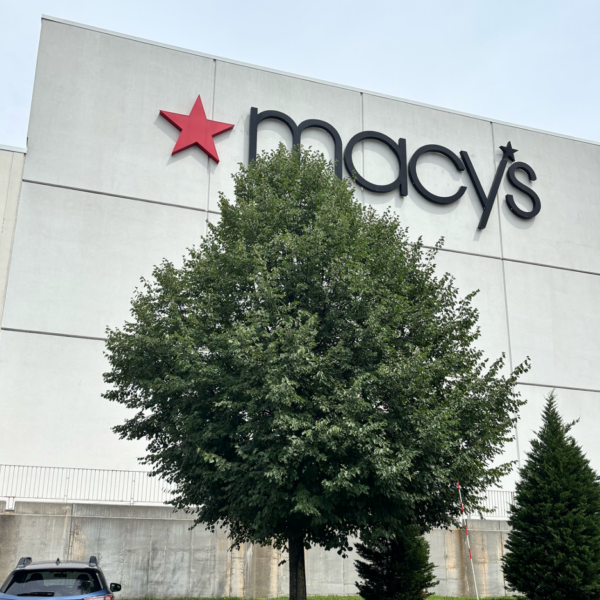
Wandering around the area, I was struck by the diversity in tree species. Several handsome lindens — also known as American basswood — stood near the store entrance. This was a good sign. I was also surprised to find a few dying green ashes – stricken by the deadly emerald borer beetle. The ashes were planted during a more hopeful ecological era. I pondered what will replace them when they are inevitably cut down.
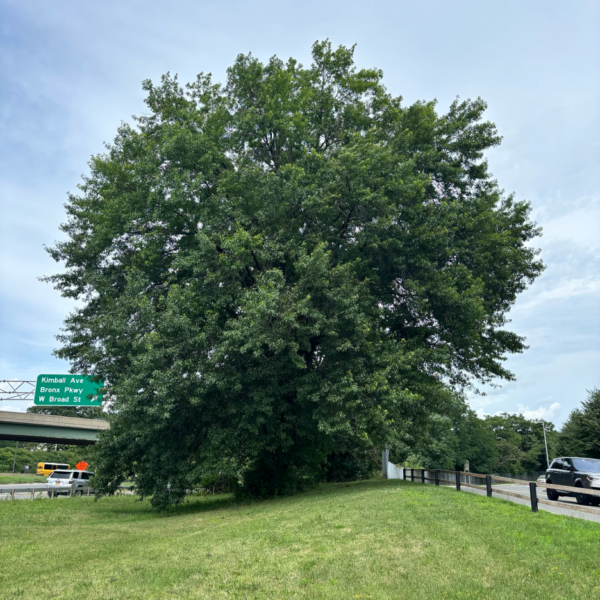
But then while looking toward the highway from the steps of the Macy’s west-side entrance, three large, free-standing trees on the median separating Central Avenue from the mall’s parking lot access road caught my attention.
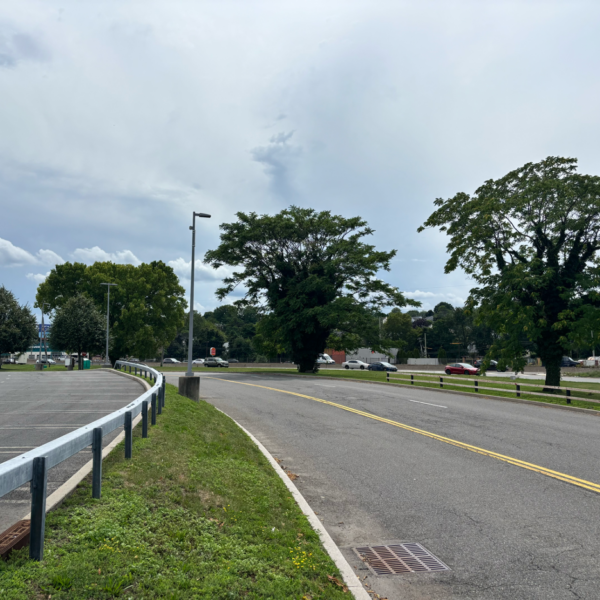
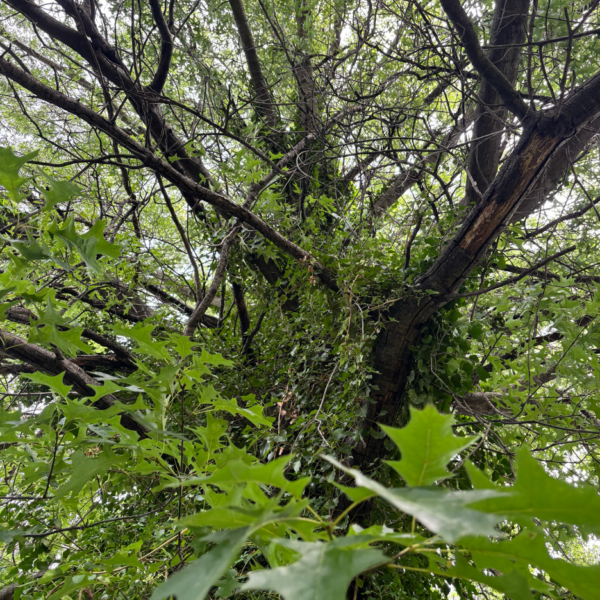
Upon closer inspection, two of them were rather spooky-looking ailanthus trees – or trees of heaven – a highly invasive species that harbors the noxious spotted lanternfly. I’ve already written disapprovingly about these trees. They reminded me of the Dementors of Azkaban with their multiple limbs extending from a central spine, wrapped in invasive, smothering English ivy. I couldn’t help but hope that they, too, will soon meet an arborist’s chainsaw.
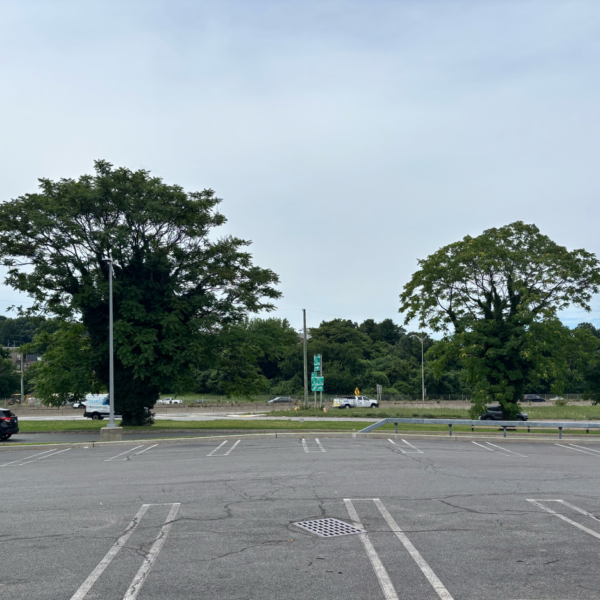
But the third in this trio was a revelation — a splendid hackberry — but with a sad story to tell.
I had found my tree.
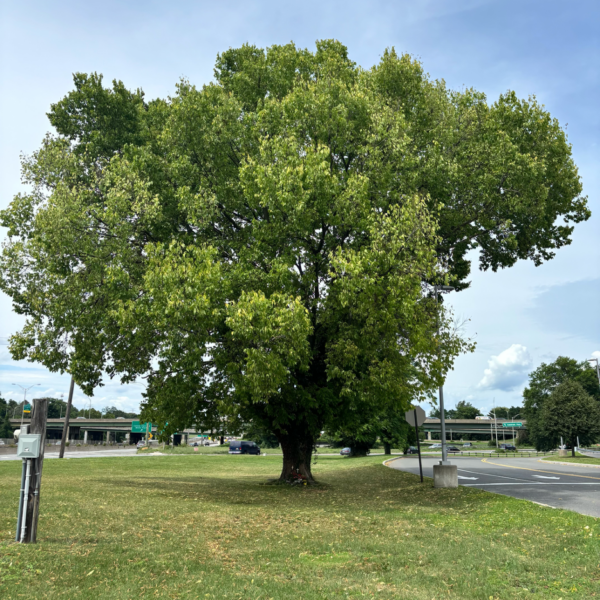
Hackberries deserve our attention – this one needs our help
Hackberries are among North America’s most underrated native trees. Sometimes mistaken for elms, they’re easy to recognize by their distinctive gray bark, covered with corky ridges and wart-like bumps. Tough, adaptable, and remarkably tolerant of drought, pollution, and poor soil conditions, hackberries thrive where many other trees can’t. Their small purple berries persist into winter, providing an important food source for dozens of bird species. Given room to grow, a hackberry can live for two centuries or more, reaching 60 feet in height with an equally broad, rounded crown. It’s the kind of tree people walk past without a second glance, yet it is quietly resilient and supports an entire community of wildlife, even on Central Avenue
The Macy’s Hackberry is a large, mature tree, so it may well have been standing at the opening of the mall some 72 years ago. It has taken advantage of its favorable sunny location. But I noticed some of its leaves are yellowing, and its trunk, like those of the neighboring trees of heaven, is also matted down with English ivy. Initially I had a hard time identifying it because the dense vine hid much of its distinctive bark – its most prominent feature.
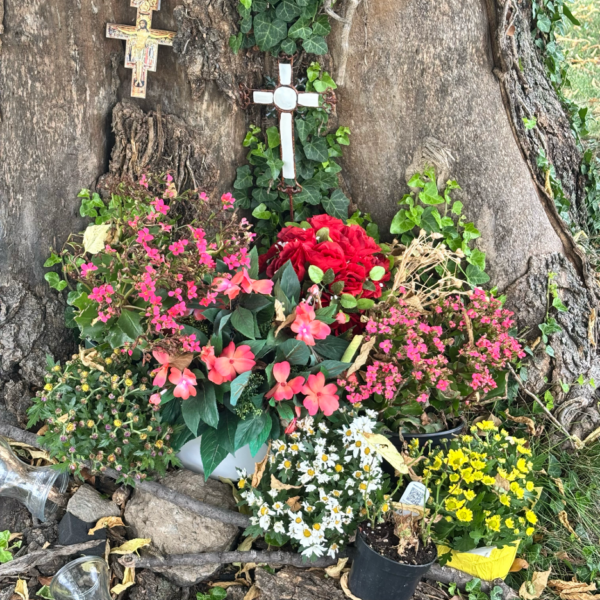
But this hackberry is more than a quiet presence on the side of the road. At its base sits a roadside memorial — a small collection of flowers and mementos that are sad to see. I checked on social media, and found a report of a car wreck that seems to be at this very spot. The posted video depicts the immediate aftermath of a violent collision – a SUV’s front end was destroyed. I fear that the worst may have happened. I hope not.
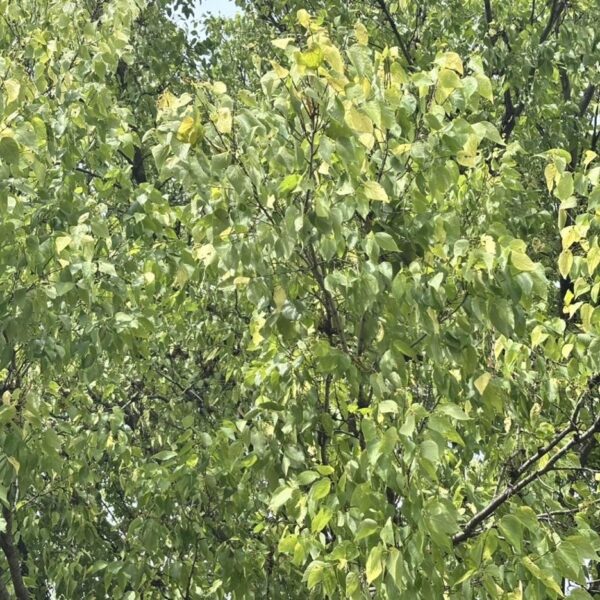
Although the hackberry remained standing, its yellowing leaves are a marker of distress. This is no surprise. If there was indeed a crash at the site, the tree needs time to recover from the damage, and it also needs to be freed from the English ivy’s strangle hold. Once fully mended and liberated from its bondage, it should thrive once again.
So, the Macy’s Hackberry joins our list of interesting trees in Yonkers. Next time you’re rushing to the perfume counter, spend a moment to look at this marvelous tree and pay your respects to the memorial at its base..
It’s a good place to reflect on the intersection of our helter-skelter lives with the immovable force of the natural world. A crossroads we cannot escape.
Bonus Tree – While visiting the Macy’s Hackberry on the access road median, walk away from the Macy’s entrance toward Exit 5 of the Cross County Parkway. In approximately 100 yards, you’ll encounter an enormous, mature black oak. It too is under attack from a thicket of invasive plants, but my gosh, it’s a glorious tree. I’ve named it the Exit 5 Black Oak, and added it to my list of 100 interesting trees.