If you could redesign Central Avenue, the city‘s premier business strip, what would your vision be?
Mayor Mike Spano wants to know. And Yonkers residents – particularly those who live in the neighborhoods surrounding Central Avenue – should take him up on his offer.
In announcing the city’s “Reimagine Central Avenue” project in August, the mayor described it as a “community-centric planning initiative” intended to transform the 2.3-mile stretch of Central Avenue between Tuckahoe Road and the Greenburgh border into a more walkable, connected and vibrant corridor.
But one phrase in the mayor’s announcement stands out. The city intends to take a fresh look at Central Avenue’s potential for “more walkable residential-retail neighborhoods.”
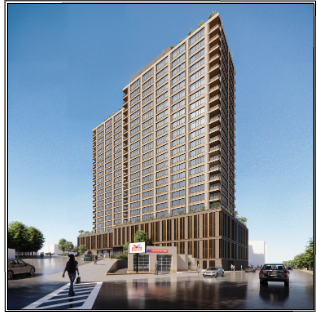
It is clear this exercise isn’t just about sidewalks, traffic, landscaping, or making Central Avenue more attractive. Instead, perhaps the most consequential matter this review will focus on: How much new housing should be permitted, and what it should look like?
According to the mayor, shopping and living trends are changing nationally, and the objective is to create “a renewed corridor that reflects that, while supporting local businesses and creating new opportunities for residents.”
Shaping the Plan
“Most importantly,” he added, “this plan must be shaped by the people who live, work and shop here.”
This is an invitation for Yonkers residents to have their voices heard.
The city expects the review to continue over the next eight to ten months, leading to a draft plan and public hearing in June 2027. It has retained planning, engineering and design consultants to study land use, zoning, design and infrastructure along the corridor and to make recommendations based, in part, on community input.
The community that the mayor references includes several constituencies whose interests could very well diverge.
Central Avenue business owners have an obvious interest in attracting customers and maintaining convenient and safe access to their stores. Property owners have an equally obvious interest in zoning changes that will increase the value of their land. Allowing housing on properties that are now restricted to commercial uses could substantially increase real estate values.
Residents, however, likely have a different perspective because of their concern for their own quality of life. Certainly, residents would welcome a more attractive and walkable corridor and a broader range of stores, restaurants and public amenities.
But residents—especially those living in neighborhoods adjoining Central Avenue—may have serious questions about the impact of any zoning changes that allow increases in residential housing and traffic.
Residents will have many questions: How tall should new buildings be? How many apartments should be allowed on a particular site? What happens to traffic on Central Avenue and the residential streets feeding into it? How much parking should new development provide? Will additional development strain sewers, schools and other public infrastructure? How many units of affordable housing should be required? And what impact will new development have on the lower-density residential neighborhoods immediately behind the commercial strip?
The question of how much and what type of new housing will be authorized goes to the heart of what the Reimagine Central Avenue project is about.
Why zoning matters
Under Yonkers’ existing zoning ordinance, much of Central Avenue is zoned BR – Restricted Business. The city’s zoning code describes the BR zone as a restricted-business district in which residences are excluded.
If the ultimate redevelopment plan calls for apartments and stores to coexist along portions of Central Avenue, the city will have to change the rules that govern what can be built there. Thus, the question isn’t simply whether Central Avenue should have housing. It is what zoning rules should govern that housing.
This is precisely why residents should become involved early in the process before the consultants draft a new zoning proposal and present it to the city council.
Once the discussion becomes a debate over a specifically proposed zone change, many of the fundamental decisions will have been made. The present planning process offers residents an opportunity to influence the almost certain zone change and to have a say on where housing belongs, how much should be allowed, what buildings should look like, and what protections should be provided to adjoining neighborhoods.
The First Workshop of Three
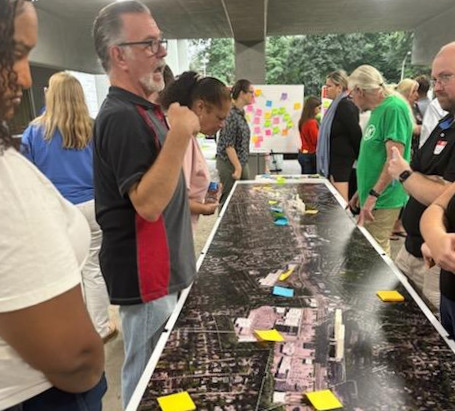
The first of three community workshops took place August 31 outside the Grinton I. Will Library. The session was conducted by city planning officials and the consultants working on the project.
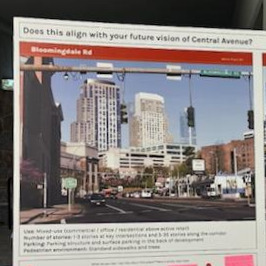
The event was designed as an interactive opportunity for attendees to ask questions and post comments on poster board representations of possible types of future developments. People could apply post-it notes and round stickers to the poster boards to express their opinions.
Many expressed concerns about over-development, and some people who I spoke to were confused about the event because there were no general opening remarks or introductions that explained what was happening, what they were being asked to do, or what the city and consultants were going to do with the comments that were collected.
Since this was the kickoff event, the city can be given a pass for the lack of clarity. There will be additional opportunities for public participation before a draft plan is presented next year. At least two more workshops are planned. Hopefully, those meetings will give residents a better opportunity to express their opinions.
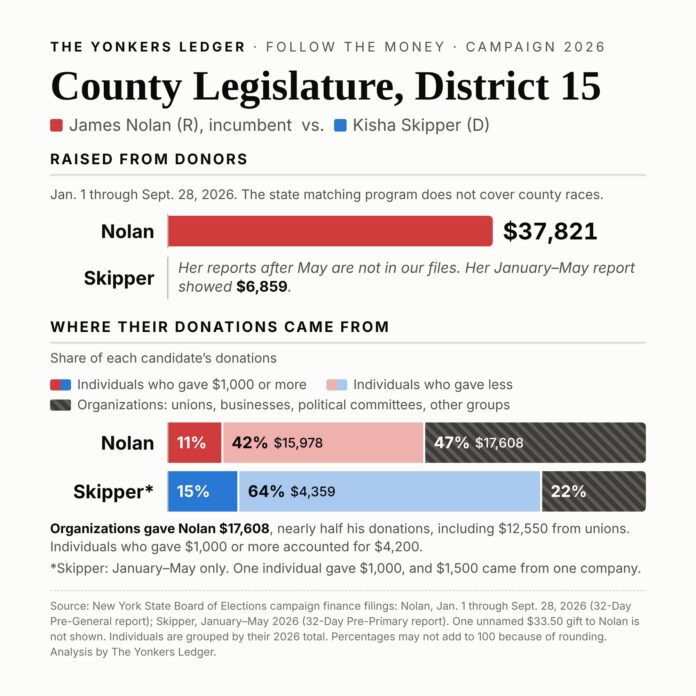
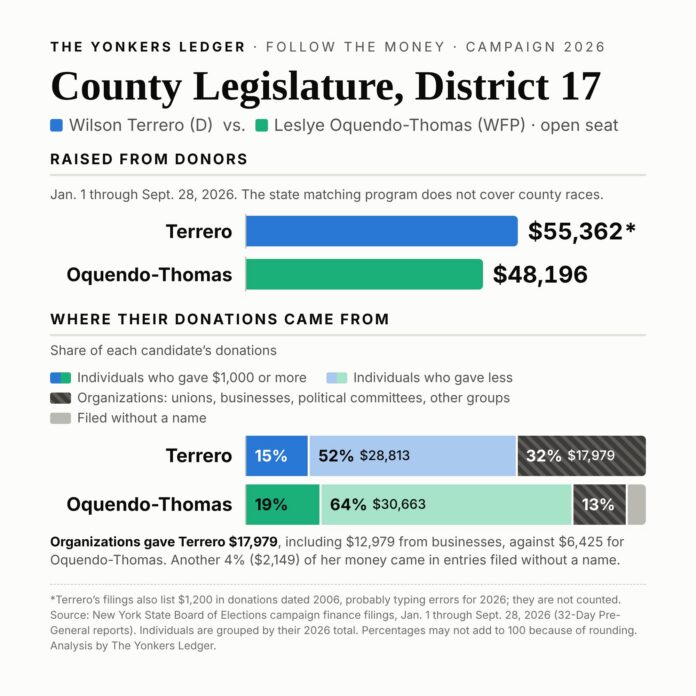
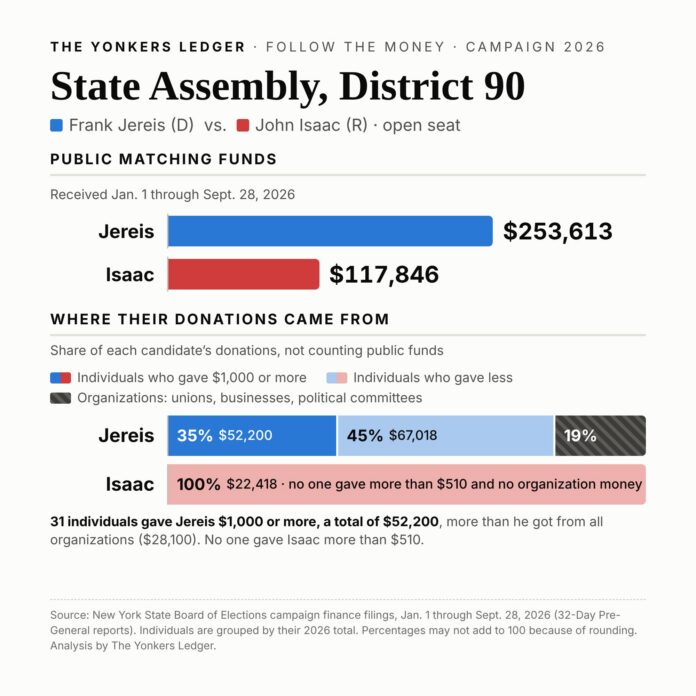
It is a certainty that the business community, with their own attorneys, consultants and campaign contributions will attempt to influence the outcome. Individual residents, however, generally don’t have comparable resources. Their influence comes largely from showing up, asking questions, submitting comments and making clear to elected officials what they want — and what they don’t want — before decisions are made.
Central Avenue will inevitably change. The real issue presented by Reimagine Central Avenue is who will help decide how it changes.